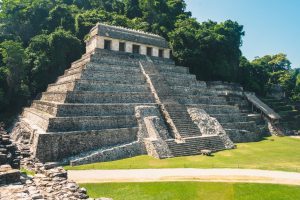
From the jungles of Chiapas to the turquoise beaches of Yucatán, Mexico’s Mayan cities are among the most fascinating in the world. Astronomy, mathematics, monumental monumental architecture: this civilization left behind sacred cities that impress to this day with their size, refinement… and their mysteries.
Key facts – Mayan cities in Mexico
- The Maya civilization spanned a vast area of Mesoamerica from around 2000 BC to 1500 AD.
- The Maya cities were veritable city-states, highly urbanized, with temples, squares, roads and agricultural zones.
- The Maya built in harmony with the topography, near cenotes, wells and natural reliefs considered sacred.
- Chichén Itzá is Mexico’s most famous Mayan city, and one of the New 7 Wonders of the World.
- Tulum offers a unique view: Mayan ruins towering above the Caribbean Sea.
- Uxmal, Muyil, Ek Balam and Cobá complete an ideal itinerary for discovering different facets of Mayan architecture.
Cities of the ancient Maya in Mexico
The Maya are among Mexico’s oldest and most brilliant civilizations (along with the Aztecs). (along with the Aztecs). Their history spans the period from 2600 B.C. to 1500 AD, with a golden age during the classical period.
Mayan culture developed in the Mesoamerican region, which today covers southern Mexico (including Chiapas and Yucatán), Guatemala, Belize, Honduras and El Salvador. The first settlements date back to around 8000 BC, but the Maya civilization proper emerged around 2000 BC. with the development of agriculture (corn-bean-squash triad) and ceramics.
Major periods of Mayan civilization
| Period | Approximate dates | Major characteristics |
|---|---|---|
| Preclassic | ~2000 BC – 250 AD | Development of agriculture, first villages, appearance of ceramics and first ceremonial centers. |
| Classic | 3rd – 10th century AD | Apogee of the great cities (Tikal, Calakmul, Palenque…), monumental architecture, artistic refinement, advanced astronomy and mathematics. |
| Postclassic | 10th – 16th century | Reorganization of power centers (Chichén Itzá, Mayapán…), intensification of trade, until the Spanish conquest. |
While Europe was going through Antiquity, then the Middle Ages, the Mayas were developing highly sophisticated urban planning. Their city-states numbered between 50,000 and 120,000 inhabitants, with a social organization far more complex than had long been imagined.
The great Maya cities functioned as administrative, ritual and economic centers, surrounded by an agricultural hinterland. Modern mapping (LiDAR) has revealed the extent of cities such as Tikal and Toniná, with networks of elevated roads, agricultural terraces, irrigation canals, reservoirs and dykes of astonishing sophistication.
Many questions remain unanswered, however, including the sudden collapse of many cities around 900 AD. The most common hypotheses suggest a combination of overpopulation, deforestation, drought, poor harvests and internal political tensions.
Top 6 most impressive Mayan cities in Mexico
| Mayan city | State | Main attraction | Ideal for… |
|---|---|---|---|
| Chichén Itzá | Yucatán | Emblematic pyramid, one of the New 7 Wonders of the World. | A first taste of the Mayas, combined with the beaches of Cancún or Playa del Carmen. |
| Tulum | Quintana Roo | Postcard-perfect ruins overlooking the Caribbean Sea. | Combine a cultural visit with a swim in turquoise waters. |
| Uxmal | Yucatán | Refined architecture, Pyramid of the Soothsayer, quieter atmosphere. | For architecture and history buffs, away from the crowds. |
| Muyil | Quintana Roo | El Castillo pyramid in the heart of the jungle, an intimate site. | A wilder, quieter getaway, close to the Sian Ka’an biosphere. |
| Ek Balam | Yucatán | Newly unearthed ruins, very well preserved sculptures. | For travellers curious about ongoing excavations and lesser-known sites. |
| Cobá | Quintana Roo | The largest Mayan pyramid in the region, in the heart of the forest. | Those who want to climb a pyramid and get lost on ancient Mayan paths. |
Chichén Itzá – Mexico’s most impressive Mayan city
Chichén Itzá is without doubt the most famous and spectacular of Mexico’s Mayan cities. In the heart of the Yucatán Peninsula, it is home to the famous pyramid of El Castillo (Temple of Kukulkán), overlooking lush vegetation.
Thanks to its beauty and symbolic value, Chichén Itzá has been listed since 2007 one of the New 7 Wonders of the World. It is also a UNESCO World Heritage Site. Unsurprisingly, it is now Mexico’s most visited Mayan city.
Another advantage: Chichén Itzá is within easy reach of of Playa del Carmen and Cancún, making it an unmissable a must-see excursion from the major resorts of the Riviera Maya.
- Don’t miss: El Castillo, the Ball Game, the Observatory (El Caracol), the Sacred Cenote.
Tulum – the enchanting city on a balcony overlooking the sea
Tulum is one of the most photogenic of all Mayan cities: its ruins stand atop a cliff, facing the turquoise waters of the Riviera Maya.
Originally, Tulum served primarily as a defensive post and maritime checkpoint. The fortifications surrounding the site still bear witness to this strategic role.
The visit is particularly enjoyable: after exploring the temples and walking the paths, you can relax by the ocean, or even swim on the small beach at the foot of the cliffs.
- Don’t miss: El Castillo on the cliff, the Temple of Frescoes, Tulum beach.
Uxmal – the wonder of Yucatán
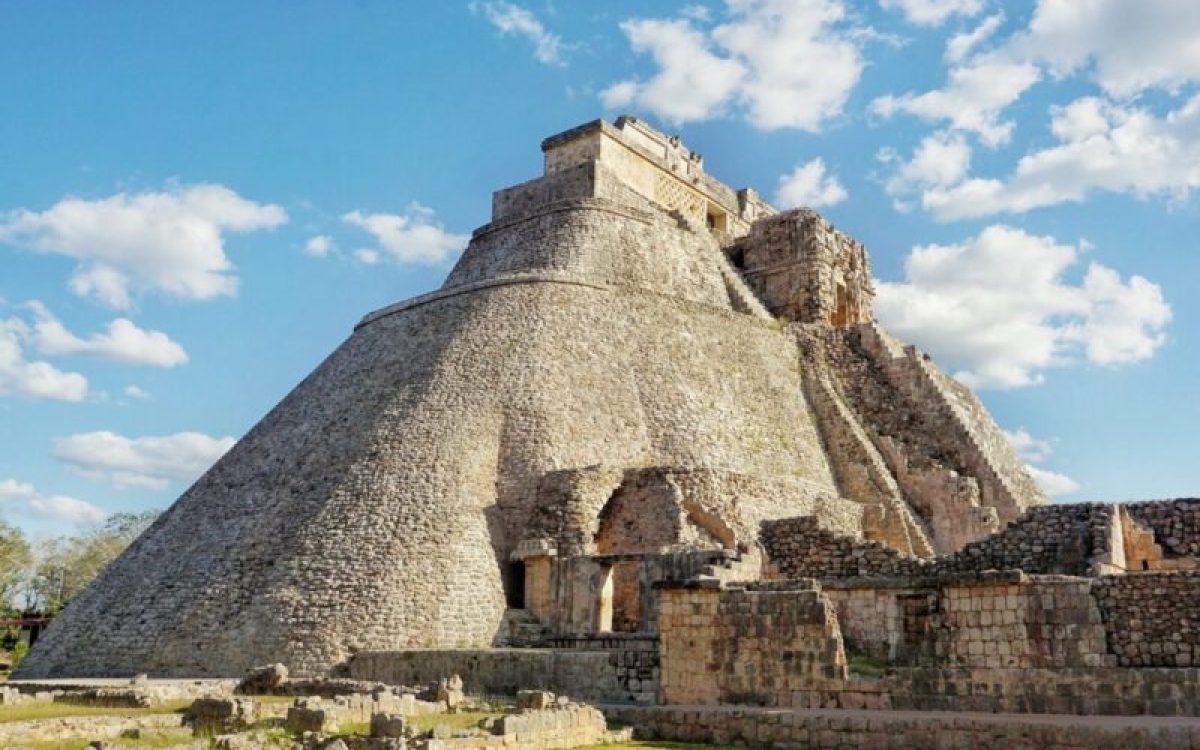
Located in the state of Yucatán, Uxmal is one of the most refined one of the most architecturally refined Mayan cities. It is distinguished by its ornate facades, geometric friezes and the famous Pyramid of the Soothsayer, with its unique silhouette.
In classical times, Uxmal was an important political and economic center. Today, the site has a more peaceful atmosphere than Chichén Itzá, while still offering a wealth of monuments.
- Don’t miss Pyramid of the Soothsayer, Quadrilateral of the Nuns, Governor’s Palace.
Muyil – the majestic Mayan city of Quintana Roo
In the heart of the state of Quintana Roo, the Mayan city of Muyil is more discreet, but just as fascinating. Surrounded by jungle, it is home to one of the most astonishing pyramids of Mayan heritage: El Castillo.
The site has two main monumental complexes, but El Castillo is the one accessible to the public and justifies the trip on its own. Muyil is also a gateway to the Sian Ka’an Biosphere Reserve.
- Don’t miss: the El Castillo pyramid, the trail to the lagoon and the mangrove swamp.
Ek Balam – the mysterious city still under excavation
Not far from Valladolid, in the Yucatán, Ek Balam is a Mayan city that has long remained in the shadows. It wasn’t until the 1980s that the site really began to be explored began to be explored by archaeologists.
Excavations are still underway, giving Ek Balam a very special atmosphere. a very special atmosphere: you have the feeling of discovering, with the researchers, whole sections of a long-forgotten city. Some of the sculptures and stuccoed masks are remarkably well preserved.
- Don’t miss: the Acropolis (where you can still climb), sculpted facades, jungle views.
Cobá – grandiose in the heart of the jungle
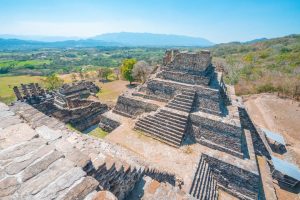
Cobá is distinguished by the presence of one of the highest Mayan pyramids on the Yucatán Peninsula. Set in the heart of the rainforest, the city extends over a vast area connected by ancient Mayan paths (sacbeoob).
Its main pyramid can still be climbed to the top, making it a unique experience. From up there, you can “touch the Mexican sky” and enjoy an impressive panorama of the canopy.
Cobá is the only one of the region’s great Mayan ruins where climbing the pyramid is still permitted, making it a must for many travellers.
- Don’t miss: the Nohoch Mul pyramid, sacbeoob (ancient roads) and sculpted stelae.